
For frontier builders and operators. Research, dealflow and rooms before they're consensus.
IN THIS ISSUE
From the research rooms: FRC #28 at Stanford School of Medicine
Tue Oct 27: Negotiation Strategies for Researchers (live, online)
Fri Nov 13: VetsinTech's Fall Gala honoring astronaut Victor Glover
Coming up: the next FRC rooms in SF, Munich and Zurich
Trossen Robotics SPV: closing today
Frontier Forecast: The Target Desk // 2030
// 01 FROM KRISTOPHER
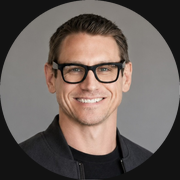 | If you work in AI, you know the rule: a model is only as good as its data. Last Wednesday at Stanford School of Medicine, FRC #28 put that rule to biology. |
Angela Oliveira Pisco, Director of Data Science at the Chan Zuckerberg Initiative, argued that the virtual cell is a data problem before it's a model problem. The next wave of data has to come from experiments. Ganesh Pusapati, Senior Research Scientist in Stanford Biochemistry's Rohatgi Lab, showed what that kind of experimental data looks like, and the drug targets it can uncover.
// 02 FROM THE RESEARCH ROOMS
FRC #28: Finding the Next Cancer Drug Target
Wed Oct 21 at Stanford. Two short talks, then open questions from the room. Thank you to Amplify Partners and GMI Cloud for sponsoring the evening.

FRC #28 at Stanford School of Medicine. Photo: Fiona Duong
Building AI/ML-Ready Multimodal Data Resources at Scale

A virtual cell would predict what a gene knockout or a drug does before anyone runs the experiment. But a model only learns what its data shows, and most cell data is inconsistent snapshots. Angela, who helped build the Tabula Sapiens atlas, called data, not models, biology's biggest bottleneck.
Tabula Sapiens worked through consistency: many organs per donor, a fixed harvesting order, one central pipeline and metadata from day one.
The payoff: a heart blood-vessel marker (SLC14A1) was confirmed at the protein level by the independent Human Protein Atlas.
Tabula Sapiens 2.0 covers more than 1.1 million cells from 28 tissues and 24 donors. Her point: that scale no longer impresses model builders, hence CZ CELLxGENE's single API and the Billion Cells Project.
The bigger shift: from snapshots to interventional data, cells measured over time, in space and under perturbation. That's the Virtual Biology Initiative's job, now with about $1.8 billion committed.
Q&A: "There is no ground truth in single cell." Her long-term vision: a cell-state simulator where you can "start changing the knobs."
Why it matters: whoever generates and standardizes perturbation data at scale decides what virtual cells learn. For AI x bio founders, the data layer looks like the moat.
Keep reading: Tabula Sapiens (Science, 2022; free full text), Tabula Sapiens 2.0 (Cell, 2026) and CZ CELLxGENE.
Repairing a Broken Molecular Machine in Colorectal Cancer

Colorectal cancer is the second leading cause of cancer deaths worldwide. In about 80% of cases, a cut-short APC gene leaves the machine that keeps the WNT growth signal off broken but not gone. Blocking WNT hits healthy tissue too, so Ganesh's team tried repairing the machine.
The method: single-letter DNA edits (CRISPR base editing) across the machine's four core parts, like fuzz-testing a protein. About 150 previously unreported mutations changed signaling.
Sanity check: the screens rediscovered patient hotspots, including APC truncations that stop exactly where patients' do.
The surprise: where two parts meet (AXIN1 and β-catenin), one edit broke the link and another strengthened it.
The stronger link sharply slowed WNT-dependent colorectal cancer cell lines and barely touched one that isn't.
Q&A: next is a small molecule that holds the two parts together, which is harder than breaking them apart. "If it doesn't let go, it will poison the entire destruction machine," Ganesh said. Gene therapy? Delivery to cancer cells is still the hard part.
Why it matters: WNT drugs stall on toxicity because healthy tissue needs the pathway. Repairing the broken brake is another route, and screens like this are the interventional data virtual cells will learn from.
Keep reading: the Nature Genetics paper, "Mutational scanning reveals substrate-assisted autoregulation of the WNT destruction complex" (Padmanarayana et al., with Pusapati and Rohatgi, July 2026).
 | FRC AI x Bio moderator Aaran Vijayakumaran, a Stanford School of Medicine postdoc, continues the conversation: a virtual cell has to know not just what's inside a cell, but also how that cell is arranged. |

// 03 INVITES
This week's rooms

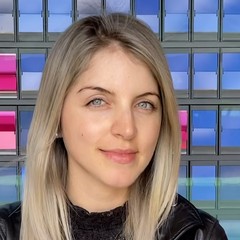 | Gerta Malaj | 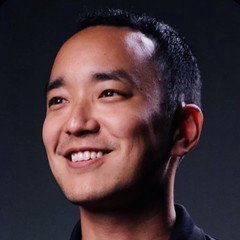 | Alex Choi |
Live and online, with Gerta Malaj and Alex Choi, cofounders of YourNegotiations. Researchers often have more leverage than they realize on compensation, title, scope and resources, and tend to give it away early. Gerta and Alex will cover how to negotiate while keeping the relationship strong, the interview mistakes that quietly cost leverage, and why market data shouldn't drive your ask. Live Q&A, no recording.
VetsinTech Fall Gala

VetsinTech's annual Veterans Day gala at the Marines' Memorial Club in San Francisco honors Victor Glover, a retired Navy Captain and test pilot who piloted Crew-1 and NASA's Artemis II. The night supports VetsinTech's free tech training for veterans and military spouses. Reception and silent auction at 6, dinner and program at 7. Dress is semi-formal. Event details.
Coming up
Full calendar: luma.com/frontiersyndicate
// 04 DEAL FLOW // ACCREDITED ONLY
Deals: Trossen Robotics SPV

Trossen Robotics at Mission Robotics, San Francisco
| Thank you to everyone who joined the live Q&A with Trossen CEO Anish Shah on Oct 18 and to everyone who came into the Frontier Syndicate SPV. We're closing today, so if you meant to join and haven't yet, request access below. |
Our thesis hasn't changed: as research customers scale into fleets, Trossen Robotics is picks and shovels for physical AI.
For accredited investors only; verification required. Any investment is subject to the SPV's definitive offering documents. Early-stage investing is risky and illiquid; you could lose your entire investment.
// 05 FRONTIER FORECAST
Frontier Forecast
Real signals, played forward into one plausible future. Each ends with what to build, what to invest in, and what to watch.
TOPIC // AI X BIO
SCENARIO: The Target Desk // 2030

It's 2030. A small oncology team has a hunch about a weak spot in a cancer's signaling machinery. Before lunch, they ask a virtual cell model what happens if that interaction gets stronger, across a dozen tissue types the model has seen perturbed thousands of times. It flags two cell types where the change looks harmless and one where it looks dangerous, and it says how confident it is in each. The team orders a base-editing screen on just those three, instead of a year of broad experiments. By Friday the wet-lab data is back, and it goes straight into the shared open dataset that trained the model in the first place.
Signals
Thousands of AI agents analyzed a whole-mouse-brain CRISPR atlas in 32 minutes, work estimated to take people months. Scripps Research, OpenAI and PerturbAI gave each agent one gene disruption; they recovered the original findings and surfaced new testable leads, and blinded experts preferred their reports to a single agent's 75% of the time (OpenAI; preprint, not yet peer reviewed). Why it matters: AI agents are starting to do the analysis step at the scale virtual-cell data will demand.
Biohub, the Department of Energy and NIH expanded the Virtual Biology Initiative to about $1.8 billion on Oct 7. DOE is putting in more than $500 million over five years, and Google DeepMind, Isomorphic Labs and Meta are jointly investing $300 million (CNBC). Why it matters: the stated goal is cell response data to interventions across far more cell types than anyone has studied, which is exactly what a predictive model needs.
Trend
Drug discovery is starting to run as a loop between predictive models and targeted experiments, built on shared, open data.
From: observational atlases, broad screens, years to a validated target.
To: interventional data at scale, models that pick the next experiment, weeks to a testable hypothesis.
If this future happens...
🛠️ Build: perturbation data generation as a service, tools that make lab data model-ready on arrival, evaluation suites that show where a virtual cell's predictions hold and where they break.
💰 Invest: teams that own a closed loop between model and bench, lab automation and editing platforms that produce interventional data cheaply, companies with hard-to-copy datasets in specific cell types.
👀 Watch: the first Virtual Biology Initiative data releases, whether virtual cell models predict perturbations in cell types they've never seen perturbed, and the first drug program that credits a virtual cell for picking its target.
// 06 WORK WITH US
Work with Frontier Syndicate
Need compute? We can source B200 and B300 bare-metal nodes, plus colo and power from a few racks up to multi-MW, on short or multi-year terms.
Speak at FRC: got a paper worth arguing about? Bring it to the room.
Sponsor FRC: put your team in front of the Bay's researchers, founders and funds.
// STAY IN THE ROOM
Know a builder who should be in these rooms? Forward this.