| // PRE-CONSENSUS | NO. 05 · NOV 9 | ||
The Frontier Syndicate |  | ||
IN THIS ISSUE
| • | From Kristopher: Terence Tao's Math 2.0 at AIAS+ 2026 |
| • | This week's rooms: Frontier Research Club #31 at Mission Robotics, Berkeley deep tech and a 48-hour AI Research Hackathon, sponsored by Cognition and OpenAI |
| • | Coming up: Stanford co-founder matching, the VetsinTech Veterans Day Gala, FRC #32 Models vs Markets and an AI x Bio night at Amplify Partners |
| • | From the research rooms: Bonnie Li and Jiaxin Ge's FRC #30 talks, now on video |
| • | Dive deeper: Aaran Vijayakumaran's Built on Biology deep dive on FRC #28's talk by Ganesh Pusapati |
| • | Compute: GPU supply is tight, and how we're helping our community get access |
| • | Invest with us: our pre-consensus thesis, and how to get our investment memos |
// 01 FROM KRISTOPHER
Math 2.0, and progress when proofs get cheap
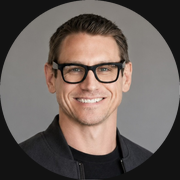 | Thursday I spent day one of AIAS+ 2026, the Chen Institute and Bay AI Circle symposium on AI for scientific discovery, at the Ritz-Carlton in San Francisco. |

At AIAS+, the Chen Institute Symposium for AI Advancing Science & Society.
The highlight for me was Terence Tao's plenary, Math 2.0. His argument, also laid out in his published Math 2.0 slides: mathematics is moving from an era of proof scarcity into one of proof abundance. Math became an early target for frontier AI because its results can be checked objectively and its literature is already digital. That makes raw problem-solving a misaligned proxy for progress. Math 2.0, in his framing, should keep expanding the frontier while decentering problem-solving, and use AI to strengthen human understanding, exposition, formal libraries like Mathlib, and safer transfer into applied work.
The rest of Thursday's program covered a lot of ground. Yejin Choi (Stanford and NVIDIA) on reasoning and discovery beyond scale. Jeffrey Ullman on big-data algorithms that are not machine learning. Tianqiao Chen on the world that can verify. Zhijian "James" Chen on inflammaging. The Chen Institute and Science AI Prize went to Sergey Stavisky for brain-computer interface work that restores speech, with finalists Nicholas C. Jacobson and Zhiling Zheng. Tao then joined Dashun Wang for the AfterMath fireside on what comes next for science.
// 02 INVITES
This week

The Embodied AI track is back at Mission Robotics, co-hosted with New Theory. Most robot learning starts from human demonstrations; both talks ask what comes after plain imitation.
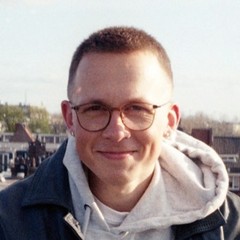 | David Knigge, Member of Technical Staff at New Theory, on Actions as Fields: neural fields from signal representation to robot control, treating actions as continuous signals rather than fixed-rate grids. |
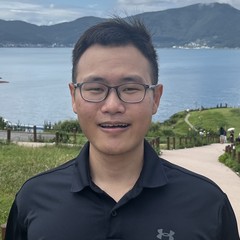 | Jonathan Yang of Stanford on Cross-Controller Transfer via In-Context Behavior Adaptation, with Chelsea Finn and Dorsa Sadigh: a policy that adapts from what was commanded versus what the robot actually did. |
Dinner, two short talks, then a long discussion.
Pre-reads
Talk 2 (Jonathan Yang): Cross-Controller Transfer via In-Context Behavior Adaptation · project page
Talk 1 (David Knigge): no paper yet for 'Actions as Fields'; for background, read his Equivariant Neural Fields paper (ICLR 2025)

A panel at Berkeley Gateway Accelerator on the bottlenecks AI for biology and chemistry share, and what one field can borrow from another. With Roopa Ramamoorthi (Director, Catalyst Program, UCSF), Kate Stafford (CEO, Halftone Bio) and Dan Hansen (Co-founder and CEO, Bactobio), moderated by Paul Donohoue (Co-founder and CEO, Umbra Bio).

48 hours in person in San Francisco, from Iterate and Boardy, building AI that does research on its own: self-improving systems, agents that run their own experiments, swarms of research agents. You build with tools and models from OpenAI, Tinker by Thinking Machines, Modal, Exa, Cognition, past.dev and Applied Reality, with Pacific, Voyager Ventures and Boardy also backing the weekend. Every hacker gets more than $600 in credits, and the top teams play for cash, OpenAI prizes, and Modal and Exa credits. Teams of 3 to 5, live judging on Sunday.
And I'll be one of the judges!
Coming up
Thu Nov 12: Research meets Revenue: Stanford Edition. 6 PM PT, a small co-founder matching evening near Stanford that pairs postdocs and PhDs with operators looking for a technical co-founder.
Fri Nov 13: VetsinTech Veterans Day Gala, honoring astronaut Victor Glover. 6 to 11 PM PT at the Marines' Memorial Club in San Francisco. I lead VetsinTech's SF Bay Area chapter; student veterans attend free.
Wed Nov 18: Bay Area Frontier Research Club #32 | Models vs Markets (dinner + paper discussion). Can AI find a durable edge in financial markets, and how would we know? Presenters to be announced; submit a paper.
Tue Dec 15: Bay Area Frontier Research Club #33 | AI x Bio Series (dinner + research discussion @ Amplify Partners). 5:30 PM PT at Amplify Partners in San Francisco, with the Amplify Bio team and our last session of the year: how do we go from biological measurement to a prediction we can trust? Presenters to be announced.
// 03 FROM THE RESEARCH ROOMS
From the Research Rooms: FRC #30, Worlds for Agents
Wed Nov 4 at SignalFire in San Francisco. If a model can generate a world, an agent can practice in it. FRC #30 took that loop in two steps: what a world model should learn to predict, and what an agent can do once it can imagine where its actions lead. Both full talks are now on the Frontier Research Club YouTube channel. Thank you to SignalFire for hosting.
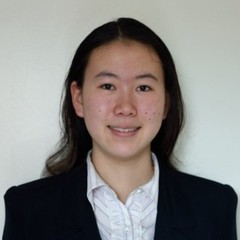 | Bonnie Li, Research Scientist, OpenAI, on From Latent World Models to Generative Worlds |

Bonnie, a core contributor to Genie 2 and SIMA 2 at Google DeepMind before joining OpenAI, traced two directions for world models. One is small and abstract: Contrastive World Models drops the pixel decoder and keeps only the information that predicts what comes next. The other is large and generative: models that render interactive 3D worlds, invent new objects as you explore, and keep a painted wall exactly as you left it, with no explicit 3D map underneath.
Her case for agents: a world model lets them try things in imagination before acting in a real world that is slow, costly and risky. She showed SIMA 2 operating inside Genie 3, where the whole loop from environment to action is generated by AI, as a first step toward world simulation for training general embodied intelligence.
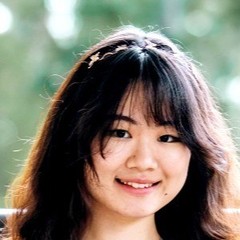 | Jiaxin Ge, UC Berkeley (BAIR) and Meta FAIR, on Train An Imaginative Agent |

Jiaxin's talk was about agents that learn before acting. Agima unifies policy and world modeling in a single omni model, so the agent generates actions and imagines futures before taking them in the real world. Trained only on two-box Sokoban puzzles, it solves 40% of four-box puzzles while seeing the real board once every five moves, against 2% for a planner that acts without imagining.
She closed on RATs, Playful Agentic Robot Learning, her CoRL 2026 Spotlight with Ken Goldberg and Trevor Darrell: a robot agent acquires skills during play, invents and verifies its own practice tasks, and uses that skill library at test time on a real robot arm.
// 04 DIVE DEEPER
A deeper dive on FRC #28
 | Aaran Vijayakumaran, our Frontier Research Club AI x Bio lead, wrote a deep dive on Built on Biology about the study Ganesh Pusapati presented at FRC #28: what if we could treat a genetic disease without correcting the original mutation? |
He walks through how Stanford researchers used CRISPR base editing to find compensatory mutations that partially restore a broken protein complex in colorectal cancer, and the questions that remain between understanding a mechanism and turning it into a therapeutic.

 | ▶ The talk it's based on: The Hidden Weak Spot in Colorectal Cancer | Ganesh Pusapati, Stanford |
// 05 COMPUTE
Compute is getting tight. We're helping our community get it.

| GPU supply is getting tighter. CBRE puts data center vacancy across North America's primary markets at a record low of 1.4% in the first half of 2026, with new capacity absorbed as quickly as it's completed. Reserved Blackwell clusters are booking out further ahead, and even a few H100s for a sprint can take real digging to find. We hear it every week from researchers at Frontier Research Club and from founders in the Frontier Syndicate community. |
So we decided that one of the most useful things we can do for this ecosystem is help people get access to compute. We work with a network of GPU clouds, operators and hardware holders. Tell us what you need, and we'll match you with the one that has capacity for your spec and make the intro. That covers anything from one 8x H100 node to full GB300 NVL72 racks, plus colo and power.
If you're in the FRC or Frontier Syndicate community and compute is slowing you down, tell us the GPU type, how many, for how long, and where.
Or reply to this email, or write to [email protected].
// 06 INVEST WITH US
Pre-consensus, found in the room.

Our thesis is simple: the most important frontier tech companies look strange before they look obvious. By the time a breakthrough is consensus, the round is priced for it. We want in earlier, while it's still a paper, a lab demo, or a researcher who's about to leave the lab to build.
Our edge is the community. Every week at Frontier Research Club, researchers from tier 1 labs present work before it hits the headlines, and the room asks the hard questions. That's where we find signal: which ideas are real, which ones are pulling the best people, and which teams are about to become companies. We back the strongest through Frontier Syndicate SPVs.
Want first look at the next one? Get our investment memos, with the thesis, the team, and why we're in.
SPV offerings are for accredited investors only. This is not an offer to sell securities.
// 07 OPEN CALLS
Open calls
Speakers: got a paper worth arguing about? Bring it to the room.
Sponsors: back the sessions where the Bay's researchers, founders and funds meet.
// STAY IN THE ROOM
Know a builder who should be in these rooms? Forward this.