| // PRE-CONSENSUS | NO. 06 · NOV 16 | ||
The Frontier Syndicate |  | ||
IN THIS ISSUE
| • | From Kristopher: Judging at Iterate's SF AI Research Hackathon, with OpenAI, Modal, Cognition, Exa and Thinking Machines |
| • | Call for presenters: life sciences researchers for FRC #35 on Dec 15, with Amplify Bio |
| • | This week's rooms: Frontier Research Club #32 | Models vs Markets: The Trading Floor After Humans, at Array VC in San Francisco |
| • | From the research rooms: last week's FRC #31 at Mission Robotics, with full talks from David Knigge and Jonathan Yang on robot actions as neural fields and adapting policies to new controllers |
| • | FRC Europe: FRC Hamburg and Munich, in partnership with Google Cloud, plus FRC Berlin on November 27 and the FRC Zurich launch on December 3 |
| • | Invest with us: our pre-consensus thesis, and how to get our investment memos |
| • | Compute: GPU supply is tight, and how we're helping our community get access |
// 01 FROM KRISTOPHER
On the jury at the SF AI Research Hackathon

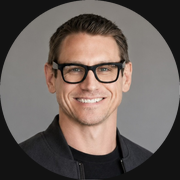 | I spent the rainy SF weekend on the jury for Iterate's SF AI Research Hackathon, November 14 and 15 at Wefunder in San Francisco. About 150 researchers and engineers formed 50 teams and shipped 34 projects in 48 hours, competing for over $100K in cash, credits and prizes. Judges came from OpenAI, Jane Street, Waymo, Scale AI, Tesla, Voyager Ventures and more (including yours truly). And for good measure, there was a magician on Saturday and mariachis to close us out on Sunday. First place built a way to keep an open-source world model's scenes consistent over longer stretches, with no retraining, and beat Genie 3's published score. Second built a research loop that hunts for math records and verifies every result so nothing can be faked. Third built a team of AI scientists that settles disagreements by running experiments instead of voting. Many thanks to Iterate for the invitation, and to sponsors OpenAI, Modal, Cognition, Exa, Tinker by Thinking Machines, Pacific (YC S26), Applied Reality, past.dev and Voyager Ventures. |
// 02 INVITES
Call for presenters: Life Sciences with Amplify Bio

 | Our last session of the year is an AI x Bio night: Frontier Research Club #35, Tuesday, December 15, at 5:30 PM PT at Amplify's office in San Francisco, with Amplify Bio, Amplify Partners' early-stage fund for technical founders in the life sciences. Aaran Vijayakumaran, a Stanford Biochemistry postdoc who writes Built on Biology and runs our AI x Bio series, leads the night, and we're looking for life sciences researchers to present a recent paper or result. Have work you'd like to discuss? Submit it for consideration. |
This week: Nov 16 to 22

Can AI find a durable edge in financial markets, and how would we know? Markets put learning systems under pressure: noisy data, shifting conditions, competing participants, and decisions whose consequences unfold over time. A strong backtest is a starting point. The harder question is whether a model's apparent advantage survives new data, transaction costs, and live deployment.
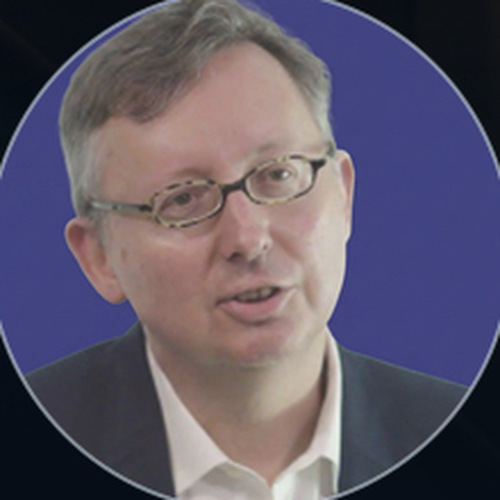 | Talk 1: Charles Elkan, Chief Scientist at Poesis and an Investing Partner at Rohati Capital, on "Machine Learning in Finance: Lessons Learned." He is on the computer science faculty at UC San Diego, and earlier served as Global Head of Machine Learning at Goldman Sachs and as Amazon's first Fellow, leading its core machine learning team. His research includes foundational work on cost-sensitive learning and on learning from only positive and unlabeled data. His work has been cited more than 32,000 times. |
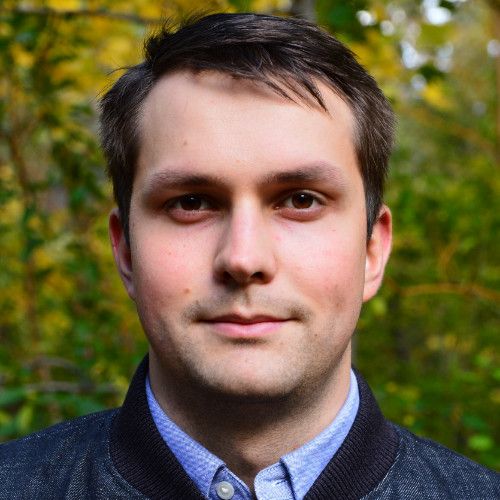 | Talk 2: Alexander Pizzirani, Vice President and Senior Quantitative Researcher at AllianceBernstein, on "Better to Dig Deep or Spread Out? Model capabilities and idea generation patterns in agentic factor discovery." He studied operations research at Cornell Tech and economics at the University of Chicago, and is a CFA charterholder. |
Networking and a light dinner, then two research presentations and discussion. Pre-reads will be shared with confirmed guests before the session.
Coming up
Wed Nov 18, 10:30 AM PT: SPC Energy Forum: Fireside with Garth Sheldon-Coulson, Co-Founder and CEO of Panthalassa. In San Francisco, hosted by South Park Commons. Approval required.
Fri Nov 27, 2:30 PM CET: Frontier Research Club #33 | Autonomous Research: The Self-Improving Lab (dinner + research discussion at Google Berlin). At Google Berlin. In partnership with Google Cloud. Papers from Adam Roe and Samuel Boguslawski, Charvi Jain, and Julius Upmeier zu Belzen. Approval required.
Thu Dec 3, 1:30 PM CET: Frontier Research Club #34 | Zurich Launch (research discussion + apéro at Google). At Google Zurich. In partnership with Google Cloud. Alexander Schröder, plus papers from Christian Stump, John Anderson Garcia-Henao, and Niels Mündler-Sasahara. Approval required.
Tue Dec 15: Bay Area Frontier Research Club #35 | AI x Bio Series (dinner + research discussion at Amplify Partners). 5:30 PM PT at Amplify Partners in San Francisco, with the Amplify Bio team and our last session of the year: how do we go from biological measurement to a prediction we can trust? Presenters to be announced.
// 03 FROM THE RESEARCH ROOMS
From the Research Rooms: FRC #31 | Beyond Imitation: Neural Fields & Transfer
Wed Nov 11 at Mission Robotics in San Francisco. The Embodied AI track came back, co-hosted with New Theory, to ask what comes after plain imitation in robot learning.

FRC #31 at Mission Robotics in San Francisco.
Most robot learning today starts with imitation: collect human demonstrations, then train a policy to copy them. This session looked at two ways to go further. David Knigge showed how neural fields can represent robot actions as smooth, continuous signals instead of fixed-rate steps. Jonathan Yang showed how a policy can adapt on the fly to a new robot controller by comparing what it commanded with what the robot actually did. The room drew researchers and engineers from OpenAI, Anthropic, Google, Meta, NVIDIA, Waymo, Stanford, Berkeley, and other frontier and academic labs.

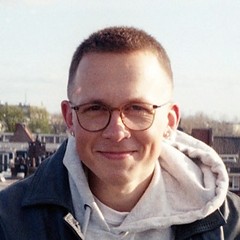 | David Knigge, Member of Technical Staff at New Theory, on "Actions as Fields." He treats robot actions as continuous signals in time, using neural fields instead of fixed-rate grids. |
He closed with an early look at robotics, including representing 3D scenes, learning dynamics over them, and treating robot state as a continuous signal over time, and said New Theory plans further announcements on that work in the coming months.

 | Jonathan Yang of Stanford, on "Cross-Controller Transfer via In-Context Behavior Adaptation." With Chelsea Finn and Dorsa Sadigh: a policy that adapts from what was commanded versus what the robot actually did. |
Thank you to Mattie Fairchild of New Theory and Mission Robotics for co-hosting, and to Luxor Agent Cloud for sponsoring the night!
Full talks are on the Frontier Research Club YouTube channel.
// 04 THE EUROPEAN CHAPTER
The European chapter: Hamburg, Munich, Berlin and Zurich
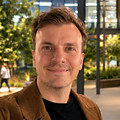 | This fall, Alexander Schröder brought Frontier Research Club to Europe. He has spent years at Google Cloud working with research institutions including ETH Zürich, EPFL, CERN and TU Munich, and speaks on building autonomous AI research loops. Frontier Research Club Europe connects European researchers with the San Francisco frontier, in partnership with Google Cloud and Digital Schooling, a Google Cloud partner. |

The first session was Monday, September 21, at Google Hamburg, with about 40 professors, founders, and PhD candidates in the room. Prof. Sebastian Pokutta (TU Berlin) spoke on AI coding agents as scientific collaborators. Prof. Sören Laue (University of Hamburg) presented theoretical work on the architectural roots of position bias in transformers. Prof. Artur Andrzejak and Min Xue (Heidelberg University) shared their ICML 2026 Spotlight paper, SVD as a Fast Interpretability Method for Transformers, on SVD and training-free mechanistic interpretability.
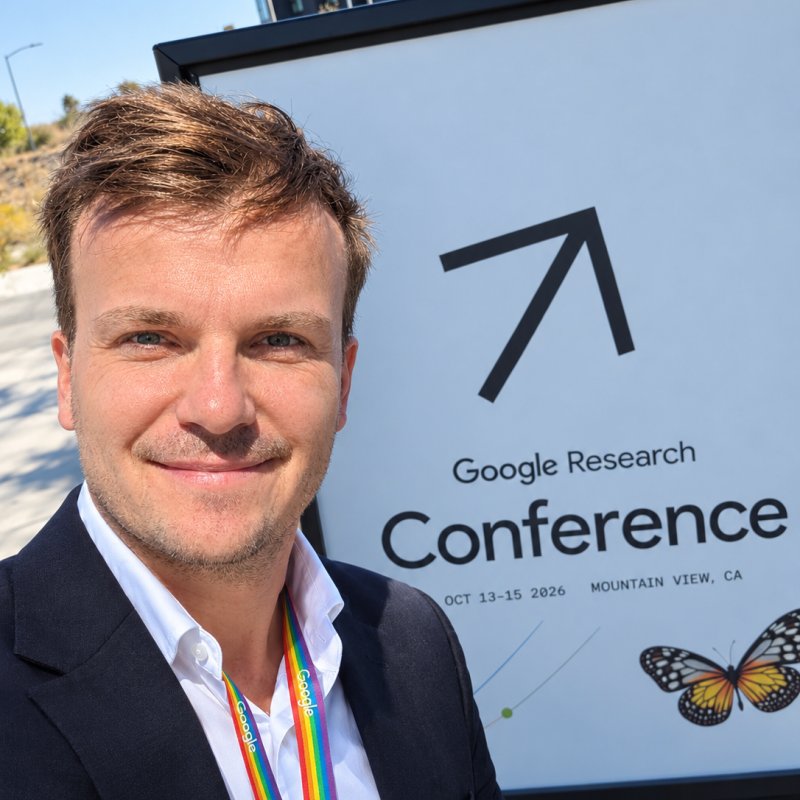 | "Watching nearly forty professors, doctoral researchers, and deep-tech founders in Munich debate Earth-system foundation models, 14,000-rule live security benchmarks, neural world models, and nine billion genomic variants in one afternoon proved why Europe needed this room." Alexander Schröder, European lead, Frontier Research Club |
Berlin is Friday, November 27, 14:30 to 19:30 CET, at Google Berlin, for Autonomous Research: The Self-Improving Lab, with papers from Prof. Dr. Adam Roe and Samuel Boguslawski (CODE University of Applied Sciences Berlin), Charvi Jain (TU Dresden and ScaDS.AI), and Julius Upmeier zu Belzen (BIH at Charité). RSVP for FRC #33 in Berlin.

// 05 INVEST WITH US
Pre-consensus, found in the room.

Our thesis is simple: the most important frontier tech companies look strange before they look obvious. By the time a breakthrough is consensus, the round is priced for it. We want in earlier, while it's still a paper, a lab demo, or a researcher who's about to leave the lab to build.
Our edge is the community. Every week at Frontier Research Club, researchers from tier 1 labs present work before it hits the headlines, and the room asks the hard questions. That's where we find signal: which ideas are real, which ones are pulling the best people, and which teams are about to become companies. We back the strongest through Frontier Syndicate SPVs.
Want first look at the next one? Get our investment memos, with the thesis, the team, and why we're in.
SPV offerings are for accredited investors only. This is not an offer to sell securities.
// 06 COMPUTE
Compute is getting tight. We're helping our community get it.

| GPU supply is getting tighter. CBRE puts data center vacancy across North America's primary markets at a record low of 1.4% in the first half of 2026, with new capacity absorbed as quickly as it's completed. Reserved Blackwell clusters are booking out further ahead, and even a few H100s for a sprint can take real digging to find. We hear it every week from researchers at Frontier Research Club and from founders in the Frontier Syndicate community. |
So we decided that one of the most useful things we can do for this ecosystem is help people get access to compute. We work with a network of GPU clouds, operators and hardware holders. Tell us what you need, and we'll match you with the one that has capacity for your spec and make the intro. That covers anything from one 8x H100 node to full GB300 NVL72 racks, plus colo and power.
If you're in the FRC or Frontier Syndicate community and compute is slowing you down, tell us the GPU type, how many, for how long, and where.
Just need a few GPUs today? Spin them up on demand here.
Or write to us at [email protected].
// 07 OPEN CALLS
Open calls
Speakers: got a paper worth arguing about? Bring it to the room.
Partners: sponsor a session, host one at your office, or co-host a research track where the Bay's researchers, founders and funds meet.
// STAY IN THE ROOM
Know a builder who should be in these rooms? Forward this.