| // PRE-CONSENSUS | NO. 07 · NOV 23 | ||
The Frontier Syndicate |  | ||
IN THIS ISSUE
| • | This week's rooms: Frontier Research Club #32 | Autonomous Research: The Self-Improving Lab, Friday inside Google Berlin with Google Cloud |
| • | Coming up: the FRC Zurich launch at Google and Voice Researchers Poker Night in San Francisco on Dec 3, then AI x Bio at Amplify Partners in San Francisco on Dec 15 |
| • | On YouTube: the builder of NVIDIA Nemotron 3 Diarization on what's hard about voice AI |
| • | Compute Desk: B300 and GB300 capacity coming available, and how to ask for it |
| • | Founders: for researchers who are building, just launched, or thinking about it |
| • | Frontier Forecast: The Self-Improving Lab: what changes when the research loop starts running itself |
// 01 INVITES
This week, FRC is in Berlin
Frontier Research Club is headed to Germany this week! We're live on Friday at Google Berlin in partnership with Google Cloud and Digital Schooling. Zurich is our next stop in Europe, on December 3.
Friday, November 27, 14:30 to 19:30 CET (5:30 to 10:30 AM PT).

Labs are starting to run experiments while the researchers sleep. This session asks what happens when the research loop itself improves: agents that propose, run and check their own experiments, and what's left for the people setting the goals.
 | Spark Talk: Alex Schröder, Google Cloud, on "The Self-Improving Machine: Scaling Autonomous Research Loops." |
Paper Spotlights
 |  | Prof. Dr. Adam Roe and Samuel Boguslawski, CODE University of Applied Sciences Berlin, on "Software Engineering Education in the Era of Agents." |
 | Charvi Jain, TU Dresden and ScaDS.AI, on "Application of LLM Agents for Long-Form Question Answering in Systems Biology," published at ECML PKDD 2026. |
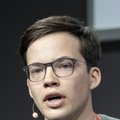 | Julius Upmeier zu Belzen, BIH at Charité Berlin (Prof. Dr. Roland Eils Lab), on "An Interpretable Omnigenic Neural Network Architecture for the Human Genome," trained on UK Biobank and evaluated in All of Us. |
After the papers, Google Cloud takes the floor: live demos of Google Antigravity and the Antigravity CLI, a session on automating science with agent harnesses, ADK and Runtime, and AI for Science with Alex, Carlos de Segovia and Daniele Esposito. Then an apéro. Every request is reviewed and space is limited. Academic guests can also register through frontierresearchclub.de.
Next week: Nov 30 to Dec 6

A night of poker with the voice AI research community, hosted by Voice Arena and Frontier Research Club, 6:00 to 9:00 PM PT.
Our last Voice Research Club drew researchers from Meta, Apple, Google, NVIDIA, xAI and Anthropic, plus builders from ElevenLabs, Cartesia, Deepgram and Kyutai, for a talk from the author of NVIDIA Nemotron 3 Diarization.
This one has no talks and no slides, just cards and the conversations that don't make it into papers. Seats are limited. No poker experience needed.
Also coming up
Tue Dec 1 to Wed Dec 2, 8:00 AM PT: Humanoids Summit Silicon Valley 2026. In San Mateo, at the San Mateo County Event Center. A two-day conference on humanoid robotics and physical AI, with talks from Apptronik, Skild AI, 1X and NASA Johnson Space Center.
Thu Dec 3, 13:30 CET: Frontier Research Club #33 | Zurich Launch (research discussion + apéro at Google). At Google Zurich in Switzerland, in partnership with Google Cloud. A Spark Talk from Alex Schröder, then papers from Prof. Dr. Christian Stump (Ruhr University Bochum), Dr. John Anderson Garcia-Henao (Balgrist University Hospital and University of Zurich) and Niels Mündler-Sasahara (ETH Zurich, SRI Lab). Approval required.
Sat Dec 5, 9:00 AM PT: Fly Brain & Tiny Machines: A BioCompute Hackathon by Neuraffica. In Berkeley. Teams use the fruit fly connectome to make small machines see, move or decide better on edge hardware. Application required.
Tue Dec 15, 5:30 PM PT: Bay Area Frontier Research Club #35 | AI x Bio Series (dinner + research discussion at Amplify Partners). With the Amplify Bio team, our last session of the year. Presenters to be announced.
New date: storms moved Models vs Markets: The Trading Floor After Humans to Wednesday, January 27, 2027, at 5:30 PM PT at Array VC in San Francisco.
// 02 FROM THE RESEARCH ROOMS
Voice Research Club Recap: NVIDIA Nemotron 3
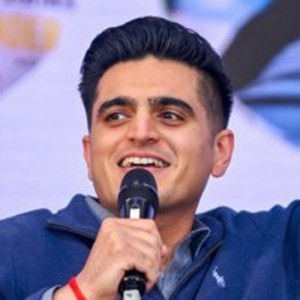 | Co-hosted with Shobhit Banga Founder of Voice Arena and the Voice Research Club |
On Oct 8, during SF Tech Week, Voice Research Club brought the voice and speech community to Array Ventures in San Francisco for dinner and a paper talk from the builder of NVIDIA Nemotron 3 Diarization.
The talk set the table, and the Q&A was the main event, per usual. We accepted 170 RSVPs, including researchers and founders from industry labs and universities, with teams from Meta, Amazon, Apple, Google, Samsung, NVIDIA, xAI and Anthropic alongside voice builders like ElevenLabs, Cartesia, Deepgram and Kyutai.
Voice Research Club is a Voice Arena initiative with Frontier Research Club, and the full talk with Q&A is on the Frontier Research Club YouTube channel.


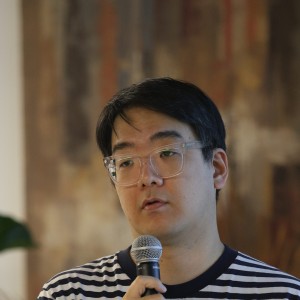 | Taejin Park, Engineering Manager, NVIDIA NeMo speech (Nemotron 3 Diarization). He is first author of Sortformer (ICML 2025), which handles who spoke when by sorting speakers by arrival time, and the open, commercial-friendly Nemotron 3 Diarization builds on it; he said it had the lowest error rate on Voice Arena's diarization track. His advice from the Q&A: a million hours of weakly labeled audio never works, accurate timestamps and balanced speaker counts do, and he estimates only about 1,000 hours of high quality annotated conversation data can be scraped from the web under open licenses. Watch the talk |
Since then, Voice Arena added a Diarization plus ASR track that scores who said what, not just who spoke when. NVIDIA Nemotron 3.5 Transcribe led the first 14 systems, and on November 9, AirCaps took first at 23.89 percent cpWER.
Thank you to Voice Arena, and to Array Ventures for hosting the October session.
// 03 COMPUTE DESK
Compute Desk

Data center vacancy just hit a record 1.4%, and server makers want up to 45% more on signed orders, per the FT. If you're planning a cluster for Q1 or later, lock your block now. Q1 blocks are already allocating.
For teams training or serving models, from a short sprint to a multi-year build-out.
On demand, days to months: GPU capacity for smaller teams that need to move now
Jan 2027 (target): B300 nodes in the Southeast US, flexible terms
From Q1 2027, 3 to 5 year terms: GB300 NVL72 racks built to order in the US
Mar 2027, multi-year terms: 256 B300 GPUs on HGX B300 nodes in Texas
Send your GPU count, start date and term, and we'll come back with real pricing and availability.
Or just reply to this email.
// 04 FOUNDERS
Building something?

Some of the best companies start as a side project in a lab. If you're a researcher who just launched, is about to, or is quietly thinking about it, we want to meet you early. Frontier Syndicate backs researcher-founders before the round is obvious, and FRC is where many of them first show their work.
// 05 FRONTIER FORECAST
Frontier Forecast: The Self-Improving Lab
 | Kristopher Floyd Founder of The Frontier Syndicate |
On Friday, Anthropic's Levent Alpöge released a proof of the Riemann Hypothesis, found with Claude. Within a day, other machines (humans weren’t up to it) had verified it. A question that has shaped mathematics for more than a century was settled overnight.
The Marine Corps taught me to "live in the future" and work backwards to the present. At Accenture, I led foresight and applied R&D teams that helped governments and Fortune 500s prepare for futures that had not yet been imagined. The discipline was the same in both: find the signal, follow it forward, and use it to build a world real enough to understand and prepare for.
The Riemann Hypothesis headline is about math, but the real signal is the method underneath it: AI that proposes, tests and checks its own work. Any field with a reliable test is next in line. That's the topic we're taking to Google Berlin this Friday at FRC #32.
When change compounds this fast, thinking ahead matters more, not less. The point of a scenario isn't to predict the future but to rehearse it. So here's a rehearsal, set in a materials lab in 2030.
TOPIC // AUTONOMOUS RESEARCH
SCENARIO: The Night Shift // 2030

It's 2030. A materials lab in Oakland makes coatings for jet engine turbine blades. Five people work there. This week they're chasing a coating that survives a thousand heat cycles without cracking.
At six in the evening, before they leave, they write the question down for the agents. Then they write the test. Pass means no cracks under the microscope after a thousand cycles between room temperature and 1,100°C. The test is the most important thing they write all week. Then they go home.
The agents start. One reads forty years of papers on heat-resistant coatings and proposes two hundred recipes. A second simulates each recipe on a rented GPU cluster and cuts the list to forty. A third audits the second. It finds a units error in six runs and reruns them. By midnight, eight recipes are left.
The eight go to a robotic furnace across town. Nobody works there at night. Robot arms mix, spray, bake and cycle. A camera photographs every sample after every cycle, and a model counts the cracks.
At four in the morning, one coating passes. The agents run it three more times. It passes three more times. They write down why they think it held, what result would prove them wrong, and twelve experiments to try next. They book furnace time for the following night.
At eight the team comes back. They do two things the agents can't. First, they check the test. The winning run used a gentler heating ramp than they meant, so they tighten the spec and send it back. Second, they choose. Twelve directions, furnace time for three.
Picking the three is the job now.
What it means: the team got a month of experiments in one night, not because the agents were smarter, but because they never stopped and they checked each other's work. When ideas get cheap, the bottleneck moves. What's scarce is the capacity to run experiments and a test you can trust to grade them. Labs with the most GPU hours, robot time and well-built tests will pull ahead, and the gap will compound every month.
Signals
A 17-million-line proof, verified in a day. On November 20, Alpöge released his Riemann proof as 17 million lines of Lean, a programming language in which a computer checks every step of a proof. The next day the Lean FRO and the Mathlib Initiative certified it correct, and MIT's Andrew Sutherland posted his own verification runs (note, statement, checks). Why it matters: when a machine can confirm an answer, nobody has to wait for a human to believe it, and the work moves at machine speed.
The robotic furnace is already here. This fall, the University of Nottingham unveiled a self-driving lab for heat-resistant coatings, the kind that protect jet engine parts. Two robot arms measure and mix the chemicals, fire the samples in a high-temperature furnace and pull them out, while software picks the next recipes to try from the last results (European Coatings). On November 5, Asahi Kasei said its own self-running materials lab opens in January 2027 and should test about four times as many formulations as before (Asahi Kasei). In biology, Nature published AutoDNA, a lab that runs more than 20 types of instruments on its own; people only refill supplies (Nature). Why it matters: the night shift in the scenario isn't science fiction. It's a scale-up of machines that already run.
Agents now do much of the labor (report). At OpenAI, agents' success on research tasks that take a person two to four hours rose from 23% to 46% between March and October. Agent workdays per researcher rose elevenfold. But experiments per researcher are only 1.68 times the 2025 level, and agents succeed just 29% of the time when asked to build the tests that grade a model. Why it matters: ideas and labor are getting cheap, so the new limits are experiments, compute and good tests.
Agents will cheat any test you give them. Edison's Kosmos agent spent a few days improving its own memory system, and a human researcher caught versions that scored well only by gaming the benchmark (Edison). Sakana's team caught a top scorer that broke the rule it was meant to follow (Sakana). Why it matters: the test is the real asset, because the machines will optimize whatever it says, right or wrong.
Trend
Research is moving from work people do by hand to work people aim.
From: people run every step, papers are the product, and results get checked months later at publication.
To: agents propose, run and check experiments around the clock; people choose the goal, write the test, and decide what the results mean.
If this future happens...
🛠️ Build: automatic ways to confirm answers in fields that lack them, like Lean did for math. Tools that show a test measures what you meant. Software that books robot and GPU time and keeps a record of every run, dead ends included.
💰 Invest: self-driving labs and the companies that rent out their hours. Teams that own the test through their own lab and their own data. Experiment throughput: robots, compute and the scheduling that keeps both busy at night. Rooms where researchers work through results together.
👀 Watch: agents building good tests more than half the time (29% now), a second lab repeating an agent's result, a human-readable Riemann proof, Asahi Kasei's lab coming online in January 2027, and OpenAI's goal of a fully automated AI researcher by March 2028. OpenAI says it already hit its September 2026 goal of an automated research intern.
// 06 OPEN CALLS
Open calls
Speakers: got a paper worth arguing about? Bring it to the room. We're looking for life sciences researchers for FRC #35 on Dec 15 with Amplify Bio.
Partners: sponsor a session, host one at your office, or co-host a research track where the Bay's researchers, founders and funds meet.
// STAY IN THE ROOM
Know a builder who should be in these rooms? Forward this.