
For frontier builders and operators. Research, dealflow and rooms before they're consensus.
IN THIS ISSUE
Live today, 5 PM PT: Q&A with Trossen CEO Anish Shah
FRC #28 on Wed Oct 21: Cell Biology x AI, at Stanford
FRC #29 on Thu Oct 22: Learning Human Preferences
From the research rooms: FRC #27, Feel or Think?
Member spotlight: Qian Jiang on designing Copilot as a thinking partner
// 01 LIVE TODAY // ACCREDITED ONLY
BUILDING AMERICAN ROBOTICS
Live today at 5 PM PT: Q&A with Trossen CEO Anish Shah

Sunday, Oct 18, 5:00 PM PT, on Zoom.
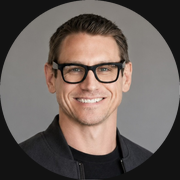 | 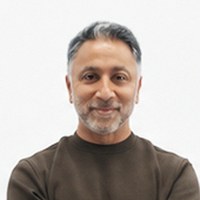 | LIVE TODAY, 5 PM PT Kristopher Floyd + Anish Shah, CEO, Trossen Robotics |
Today I'm hosting a live conversation with Anish Shah, CEO of Trossen Robotics, about the Frontier Syndicate SPV. Bring your real questions: what the hardware is built for, who buys it today, and what changes as research customers scale into fleets.
Can't make it live? The session will be recorded, and I'll send the recording to anyone who can't join.
Why we're backing Trossen:
A lot of the field's landmark robot learning work runs on Trossen hardware. Trossen is the home of the original ALOHA architecture, Google DeepMind's ALOHA 2 is built on Trossen arms, and Gemini Robotics research used its ALOHA Stationary kit.
NVIDIA, Anthropic, OpenAI and Physical Intelligence buy Trossen robots. Company-reported footprint: 400+ universities and colleges and 60+ Fortune 500 organizations.
The new lineup is built for scale: Rivet and Workbench for data collection and deployment, and Trossen Cloud to run fleets. Our thesis: as research customers scale into fleets, Trossen is picks and shovels for physical AI.
Planned Frontier Syndicate SPV on AngelList: a Rule 506(c) offering to invest in Trossen via a SAFE. Terms and memo go to the SPV Access list.
Indicative commitments close tonight, Sunday Oct 18. If you want in, request SPV access before then.
For accredited investors only; verification required. Any investment is subject to the SPV’s definitive offering documents on AngelList. Early-stage investing is risky and illiquid; you could lose your entire investment.
// 02 INVITES
This week's research rooms

At Stanford.
Ganesh Pusapati, PhD (Senior Research Scientist, Rohatgi Lab, Stanford Biochemistry) on repairing a broken molecular machine in colorectal cancer, from his July 2026 Nature Genetics study. More than 80% of colorectal cancers are driven by APC mutations, and strengthening one interaction in the destruction complex restored its function and slowed cancer-cell growth in the lab.
Angela Oliveira Pisco, PhD (Director of Data Science, Chan Zuckerberg Initiative; previously insitro and CZ Biohub, Tabula Sapiens) on what virtual cells can actually predict, and what evidence it takes to trust them in drug discovery.
Guided discussion with Aaran Vijayakumaran of Stanford Biochemistry. Dinner, two short talks, then extended Q&A.

At Array VC.
What should a model learn when human preferences and measured outcomes disagree? A creative work can win votes from other creators, satisfy a brief, and still land differently with a real audience. This session looks at how subjective feedback becomes a training signal: preference modeling and ranking, reward design, post-training, and evaluation where quality is hard to define and people reasonably disagree.
Questions for the room: how do you tell differences in taste from annotation noise? What happens when a reward model learns an easy proxy for quality? And when outcomes arrive late, or only for the outputs you shipped, how do you know a creative decision actually helped? Dinner, two research talks, then extended discussion.
General Creative runs AI video ad contests: brands post a brief, creators compete, and only the winners get paid. Now they're building a model that predicts which ad wins, and they want a founding CTO to lead it. This is a cofounder-level seat for someone with hands-on RLHF, reward modeling or RL experience, in SF. It's the same problem FRC #29 is digging into, and Thursday's session is the room to meet the team. Interested? Learn more.
Coming up
Fri Oct 23: SCALE at GMI: Spooky Demo Day [Cohort 2], Hillsborough
Tue Oct 27: Negotiation Strategies For Researchers
Wed Nov 4: FRC #30 Worlds for Agents, at SignalFire
Mon Nov 9: FRC Munich: chapter launch
Thu Dec 3: FRC Zurich: chapter launch
Full calendar: luma.com/frontiersyndicate
// 03 FROM THE RESEARCH ROOMS
From the Research Rooms: FRC #27, Robotics & Embodied AI: Feel or Think?
Wed Oct 14 at Mission Robotics, our monthly Embodied AI track. Thanks to Mission Robotics for hosting a room full of researchers and a floor full of robots. One question: before a robot acts, does it need richer senses or better reasoning?
From the room: an attendee's recap on X.

FRC #27 at Mission Robotics.
When Reasoning Helps Action: Steering Chain-of-Thought in VLA Policies

Reasoning VLAs think out loud before they act, so chain of thought could serve as a runtime safety check. Joseph split that into two questions: can we catch and fix bad reasoning (correctability), and does fixed reasoning change the action (actionability)?
TRUST is a separate, lightweight value model that scores partial reasoning token by token and steers it toward correct reasoning, without touching the policy's weights.
On NVIDIA's Alpamayo driving model, reasoning correctness rose from 75.9% to 90%. In one clip the model planned to merge left into an occupied lane; steered, it held its lane. Collisions fell 30.4%.
On a reasoning-capable manipulation VLA, the reasoning improved but the robot mostly ignored it, and task success barely moved.
Q&A: asked whether driving vs. manipulation is a fair comparison, Joseph agreed two case studies can't settle it. "Brake" maps almost directly to a driving action; "grasp" says little about how to move a hand.
Why it matters: reasoning only earns its cost when actions actually depend on it.
Pre-read: When Reasoning Helps Action: Monitoring and Steering Chain-of-Thought in Vision-Language-Action Policies, Karnik, Lee, Gupta & Bansal, Stanford (arXiv, Sept 2026).
Where Humans Touch the World: Robot Policies from Human Contact

Physical intelligence is held back by data, and teleop rigs don't scale past the lab. Shashank's bet is to learn from how humans touch the world, reconstructed in 3D from ordinary images and video.
Annotators paint contact onto a 3D hand mesh, then use a contact axis (a start point plus a direction) to transfer it onto the object mesh in about two clicks. No tactile sensors needed.
That produced more than 60,000 annotated frames, used to train a transformer that reconstructs hand and object in 3D from a single image, even in cluttered kitchens.
Next: transfer that contact onto robot hands as a constraint for recovering robot-object motion. It's early work, with no success rates yet.
Q&A: it works best on five-finger hands and not at all on two-finger grippers. To close the embodiment gap, he proposes small hand-to-embodiment adapters trained on paired tactile data.
Why it matters: anywhere you can put a camera, from kitchens to chip fabs, becomes a possible source of robot training data.
Pre-read: Towards in-the-wild Egocentric 3D Hand-Object Pose Estimation (EPIC-Contact), Bansal, Zhu, Tripathi, Zhao, Black & Damen, University of Bristol and Max Planck Institute for Intelligent Systems (ECCV 2026).
// 04 MEMBER SPOTLIGHT
Designing intelligence: Qian Jiang on Copilot as a thinking partner

 | FRC MEMBER Qian Jiang, Product Designer, Microsoft |
FRC member Qian Jiang, a product designer at Microsoft who co-designs Copilot experiences, just released a video on Microsoft's site about the kind of AI her team is building: a thinking partner that supports human thought, attention and agency instead of competing for it.
Her argument is that AI design now reaches past the interface into models, memory and system behavior, which gives designers real influence over how intelligence shapes people.
The question she leaves us with: if AI is becoming an environment we live inside, how will it shape how we think, how we live, and who we become?
Share it on X: x.com/qianjiang___
// 05 WORK WITH US
Work with Frontier Syndicate
Short on compute? We can help source H100s through B300s, plus colo and power.
Speak at FRC: got a paper worth arguing about? Bring it to the room.
Sponsor FRC: put your team in front of the Bay's researchers, founders and funds.
// STAY IN THE ROOM
Know a builder who should be in these rooms? Forward this.